Read the Funder Before You Write a Single Word
Aug 19, 2026
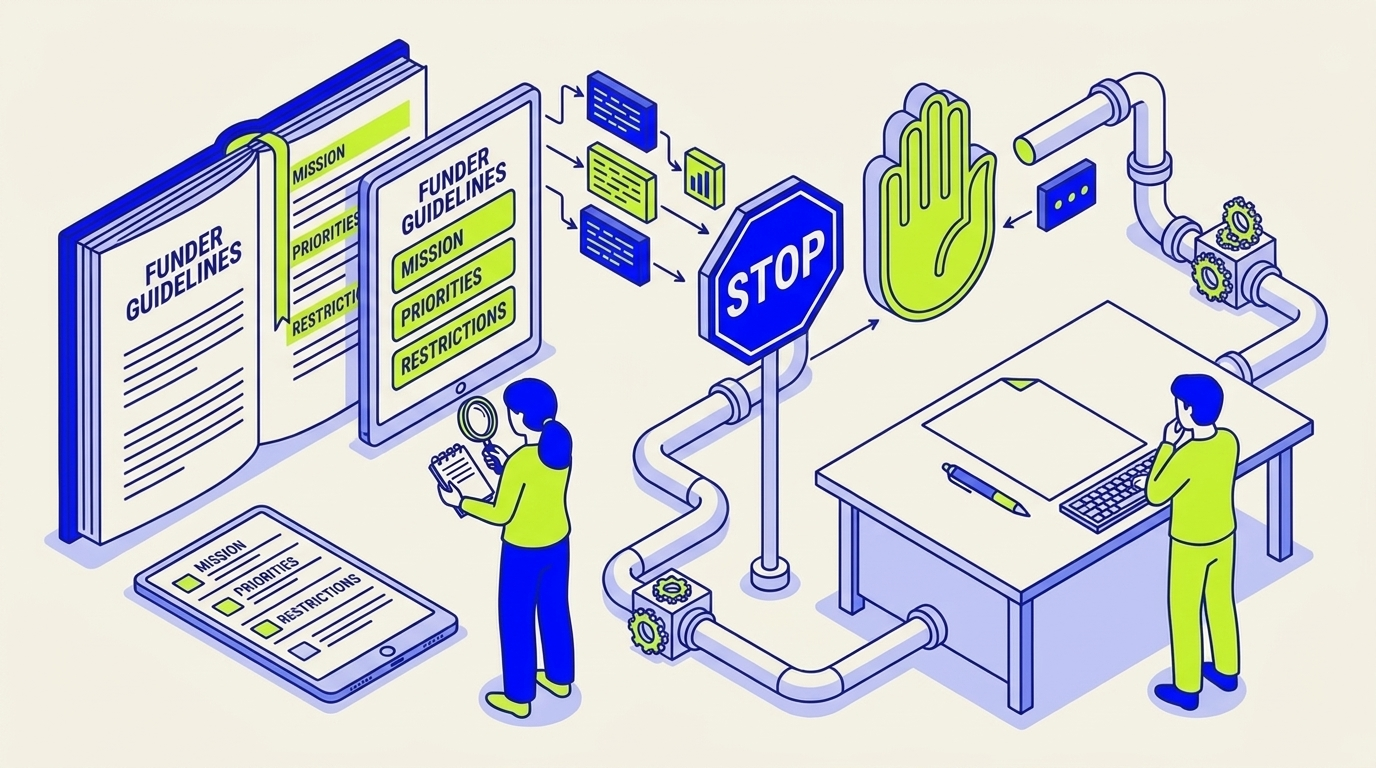
Most declined proposals are not rejected because the writing was weak. They are rejected because the applicant answered a question the funder never asked. The organization was strong, the need was real, the budget was reasonable, and none of it mattered, because the proposal was built around what the applicant wanted to say rather than what the funder had told everyone they wanted to fund.
Reading a funder properly is the part of grant work that happens before the writing starts. It is also the part most often skipped, because it feels like preparation rather than progress. It is the opposite. An hour spent understanding a funder is worth more than a week spent polishing prose they were never going to fund.
What a funder actually tells you
Every funder leaves a trail. The guidelines are only the beginning of it. Their website states a mission and names focus areas. Their most recent tax filing, which is public for private foundations, lists every grant they made last year, to whom, and for how much. Their annual report describes what they believe is working. Their program officers give interviews and speak at conferences. Taken together, these sources describe a funder far more honestly than any single guidelines page can.
The goal of reading all of this is to answer three questions. What does this funder believe about the problem you both care about. What kind of organization do they trust with their money. And what does a funded project look like to them, in practice, at the dollar amount they typically give.
When you can answer those three questions in plain language, you are ready to write. When you cannot, you are guessing, and the proposal will read like a guess.
The tax filing is the honest document
A funder's website describes who they aspire to be. Their grant history describes who they actually are. When those two things disagree, the grant history wins, and you should believe it.
A foundation might describe itself as supporting bold, innovative approaches to youth development. Their filing might show that ninety percent of their grants last year went to established organizations with budgets over two million dollars, in awards between twenty and fifty thousand dollars, nearly all of them renewals of prior grants. That is not a foundation looking for bold new ideas from small organizations. That is a foundation that funds a stable roster of trusted partners and occasionally adds one. Knowing this before you apply saves you from writing a proposal that was declined the moment it arrived, for reasons that had nothing to do with your merit.
The filing tells you the real award range, which sets your ask. It tells you the kind of organization they fund, which tells you how to frame yours. It tells you whether they renew or rotate, which tells you your honest odds as a newcomer. None of that is on the guidelines page.
Match the frame, not just the topic
Two organizations can do identical work and describe it in ways that land completely differently with the same funder. A funder focused on economic mobility and a funder focused on educational equity might both support an after-school tutoring program. The program is the same. The proposal should not be. One version leads with earning potential and long-term self-sufficiency. The other leads with closing achievement gaps and access to opportunity. Same activities, same budget, same outcomes, framed around what each funder is trying to change in the world.
This is not spin, and it is not telling funders what they want to hear at the expense of the truth. It is recognizing that your work touches several real outcomes at once, and choosing to foreground the one that a particular funder already cares about. You are meeting them where their attention already is.
Read the room before the deadline, not after
The best time to understand a funder is before their cycle opens, when you have time to act on what you learn. If their grant history shows they only fund organizations they already know, the right move might be to skip the application this year and spend the time getting on their radar instead, through a program officer conversation, an introduction from a current grantee, or an invitation to see your work. A relationship built over a year will do more than a cold proposal submitted in a week.
If their history shows they fund newcomers regularly and their priorities line up with your work, then you write, and you write with the confidence of someone who knows they are a real fit rather than a long shot hoping to get noticed.
Either way, the reading came first, and the decision followed from it. That is the order that wins grants.
The upstream work
Understanding funders well is slow, and it is the difference between a submission rate that feels busy and a success rate that funds the work. If your team is applying to everything that moves and winning less than it should, the problem is usually upstream of the writing. It is worth fixing there.
If you want help building a funder research process your team can run without you, or a way to decide which opportunities are worth the effort before anyone starts drafting, reach out. That upstream discipline is where most of the real gains in grant work actually live.