We built the grant research tool fundraisers pay four figures a year for. Then we gave it away.
Oct 4, 2026
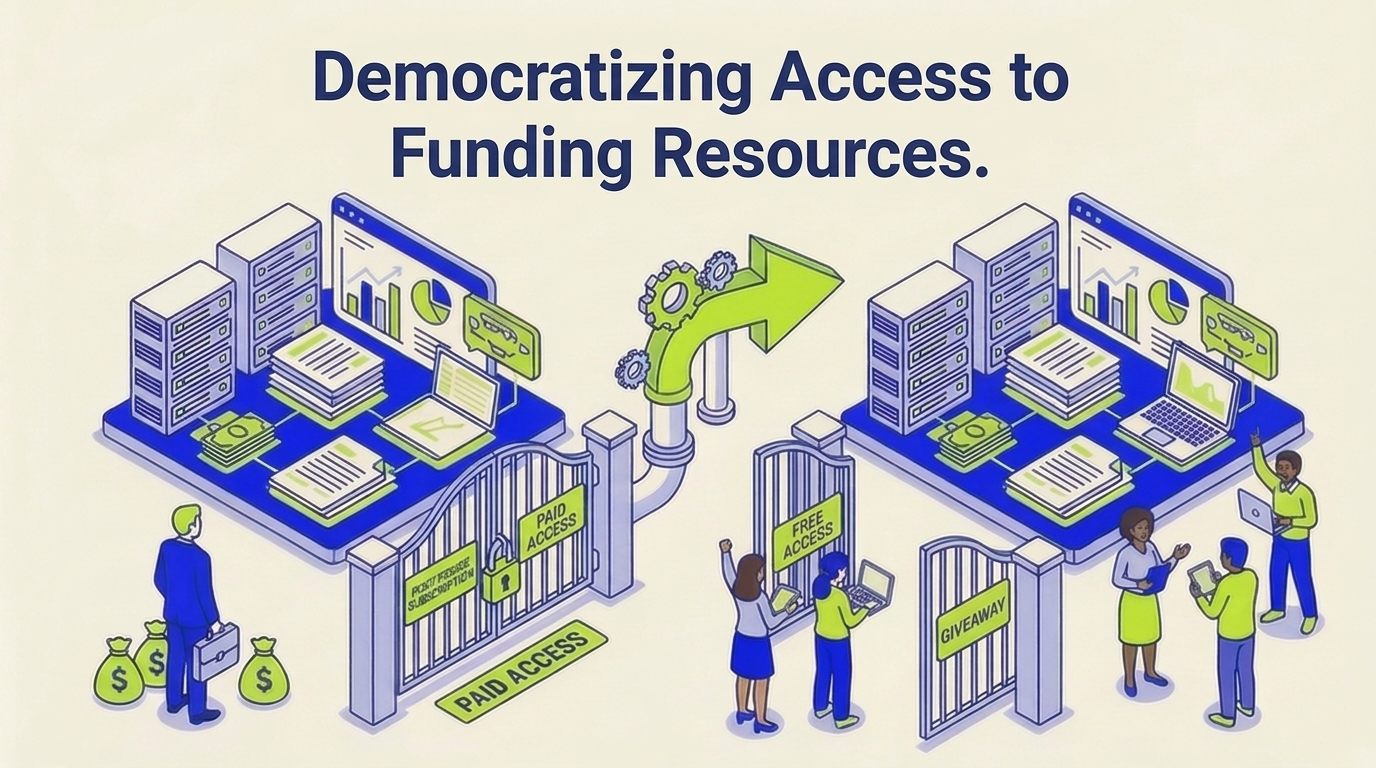
A subscription to one of the big grant databases runs four figures a year, per seat. If fundraising is your business, you pass that cost down or you eat it. If you're a small nonprofit, you usually just go without, and your fundraising research happens at the speed of a search engine and a prayer.
Every fundraiser I know asks the same first question: who funds organizations like mine? Who funds food banks in Texas? Who funds housing work in Ohio? For years, answering it meant either paying up or spending days pulling foundation filings one at a time.
We built the tool that answers it in seconds. Then we gave it away.
What the free tool does
who-funds searches 8.5 million grants reported to the IRS by 111,000+ private foundations. Type a recipient name, a city, a state, a purpose keyword, or a tax year. It returns the funders already giving to organizations like yours, ranked by how closely your search matches what they actually fund.
Open any funder and you get their typical grant sizes, their giving history, and links straight to their 990 filings. No account. No email gate. No paywall that opens the good columns only after you subscribe. The search page is the whole product.
A state filter matters more than you'd think. Foundations file grant lists in a schema built for tax compliance, not for search, and a name-only query across 8.5 million rows runs long. Narrow by state and the same query comes back in seconds.
What the data is, and what it isn't
You should check our work. Count the rows. Here's exactly what you're counting.
Every grant was reported by a private foundation on Form 990-PF and is drawn from the IRS's published bulk data of e-filed filings. Recipient names appear exactly as the foundation typed them, typos and all. There are no recipient EINs from 2021 onward; the IRS stopped including them, and we won't pretend otherwise. Tax year 2021 is roughly 70% published, a number we can state because when we found the IRS's second 2022 bulk file sitting unlinked on their own site, we ingested all 37,237 filings and verified them against our gate before counting any of them. Occasionally a grant appears as a negative number. That's the paper trail of a correction or a reversal, not a glitch in the data.
That list of caveats is not a disclaimer we hope you skip. It's the point. Grant data has edges, and a tool you trust should tell you where they are.
For fundraisers: take the engine home
If you run funder research every week, the free tool has a limit that will find you eventually. It's ours, it runs on our servers, and the freshest data lives here.
So our friends at Higher Castle built a way to take it home. GrantTrace is the same corpus, 111,000+ funders and 8.5 million grants, restored as your own private copy on managed Postgres. Higher Castle sets it up for you. One purchase. It costs less than a single year of the big databases, and there is no subscription renewing on your credit card every January after you've stopped noticing it. No seats, no bloat.
Every monthly release passes a 9-point data-integrity gate before it ships. One of the nine checks tries to write to the database and must be refused, because the tool's database role can read and nothing else. Another feeds the search engine the same search in different casings and punctuation and requires identical results. If a release fails any check, it doesn't ship. That's the whole policy.
Why we give tools away
AGM Impact has secured $62 million in funding for clients between 2015 and 2025, with an 80% conversion rate on the prospects we've cultivated and managed. The work spans more than 50 publicly funded projects and hundreds of private institutional grants. We are not a software company, and we don't plan to become one.
We give the research tools away because the work we sell starts where the tools stop: grant and project management, revenue strategies and government bids, the roadmap work that turns a list of names into a pipeline with dates on it. A free tool that saves your organization real money is worth providing on its own, and if it shows you what careful grant work looks like before you've spent a dollar with anyone, that's fine too.
Try the free tool. See what GrantTrace includes. And if your organization needs the strategy behind the search, let's talk.